Healthcare Facility Cleaning Standards: 2026 Compliance and Best Practices Guide
Healthcare-associated infections (HAIs) remain one of the most pressing challenges facing medical facilities, contributing to approximately 1.7 million
Healthcare Facility Cleaning Standards: 2026 Compliance and Best Practices Guide
Introduction
Healthcare-associated infections (HAIs) remain one of the most pressing challenges facing medical facilities, contributing to approximately 1.7 million infections and 99,000 associated deaths annually in U.S. hospitals alone. As we move through 2026, the regulatory landscape for healthcare cleaning has grown increasingly sophisticated, with the Centers for Medicare & Medicaid Services (CMS), the Centers for Disease Control and Prevention (CDC), and accrediting bodies like The Joint Commission raising the bar for environmental services departments.
For Integrated Medical Services clients operating hospitals, surgical centers, clinics, and long-term care facilities, understanding the current standards is not just about compliance—it is about protecting patients, staff, and organizational reputation. The cleaning protocols that worked five years ago are no longer sufficient to meet today's evidence-based expectations.
This guide provides a comprehensive overview of the 2026 healthcare facility cleaning standards, highlighting what has changed, what remains constant, and how facilities can implement best practices that satisfy regulators while genuinely reducing infection risk.
The Evolving Regulatory Framework
CMS Conditions of Participation
CMS continues to enforce strict environmental services requirements under its Conditions of Participation. In 2026, surveyors are placing heightened emphasis on documented cleaning verification, staff competency assessments, and integration of environmental services into the facility's overall infection prevention strategy. Survey deficiencies related to environmental cleaning have increased year-over-year, signaling that regulators view this domain as a critical area of focus.
Facilities must demonstrate not only that cleaning occurs, but that it occurs correctly, consistently, and with measurable outcomes. This shift toward accountability has transformed environmental services from a perceived "janitorial" function into a clinical discipline.
CDC and HICPAC Guidance
The Healthcare Infection Control Practices Advisory Committee (HICPAC) released updated guidelines in late 2024 that continue to shape 2026 practice. Key updates include enhanced recommendations for high-touch surface disinfection, clearer guidance on the use of sporicidal agents in C. difficile-endemic areas, and strengthened language around the role of no-touch cleaning technologies as adjuncts to manual processes.
Core Cleaning Standards Every Facility Must Meet
1. Risk-Based Cleaning Frequencies
Healthcare facilities must categorize spaces by infection risk and apply appropriate cleaning frequencies:
- High-risk areas (operating rooms, intensive care units, isolation rooms) require full cleaning and disinfection at least once per shift, with terminal cleaning at patient discharge.
- Moderate-risk areas (general patient rooms, emergency departments, treatment rooms) require daily cleaning with discharge cleaning between patients.
- Low-risk areas (administrative offices, public corridors) require routine scheduled cleaning with attention to high-touch surfaces.
2. High-Touch Surface Disinfection
High-touch surfaces—bed rails, over-bed tables, IV poles, door handles, light switches, bathroom fixtures, and call buttons—require more frequent attention than general surfaces. The 2026 standard calls for high-touch disinfection at minimum every four hours in patient care areas, with more frequent intervals in critical care settings.
EPA-registered disinfectants must be effective against the pathogens most relevant to the facility's patient population. In 2026, facilities are increasingly expected to use List N products with demonstrated efficacy against emerging threats.
3. Terminal Cleaning Protocols
Terminal cleaning at patient discharge remains one of the most important interventions for preventing pathogen transmission. The updated 2026 expectations include:
- Removal of all disposable items and linens
- Comprehensive cleaning of all horizontal and high-touch surfaces
- Use of EPA-registered disinfectants with appropriate contact times
- Verification of cleaning completeness through direct observation, fluorescent markers, or ATP testing
- Documentation with staff signature, date, and time
Best Practices for Implementation
Adopt a Bundled Cleaning Approach
Research consistently demonstrates that bundled interventions—combining administrative support, staff training, monitoring with feedback, and effective products—produce the strongest results. Facilities should not rely on any single product or technology to achieve compliance.
Implement Objective Monitoring
Visual assessment alone is insufficient. Leading facilities have adopted objective monitoring methods:
- ATP bioluminescence testing provides rapid feedback on cleaning thoroughness
- Fluorescent marking allows supervisors to objectively evaluate coverage
- Adenosine triphosphate swabbing can identify surfaces that appear clean but remain contaminated
- Digital checklists and time-stamped documentation create auditable records
Invest in Staff Training and Competency
Environmental services staff are the front line of infection prevention. In 2026, expectations for training have expanded:
- Initial orientation must include pathogen transmission, product chemistry, contact time, and personal safety
- Annual competency assessment is now standard expectation
- Specialized training is required for high-risk areas like operating rooms, isolation rooms, and bone marrow transplant units
- Staff should understand their role within the broader infection prevention framework
Embrace Technology Thoughtfully
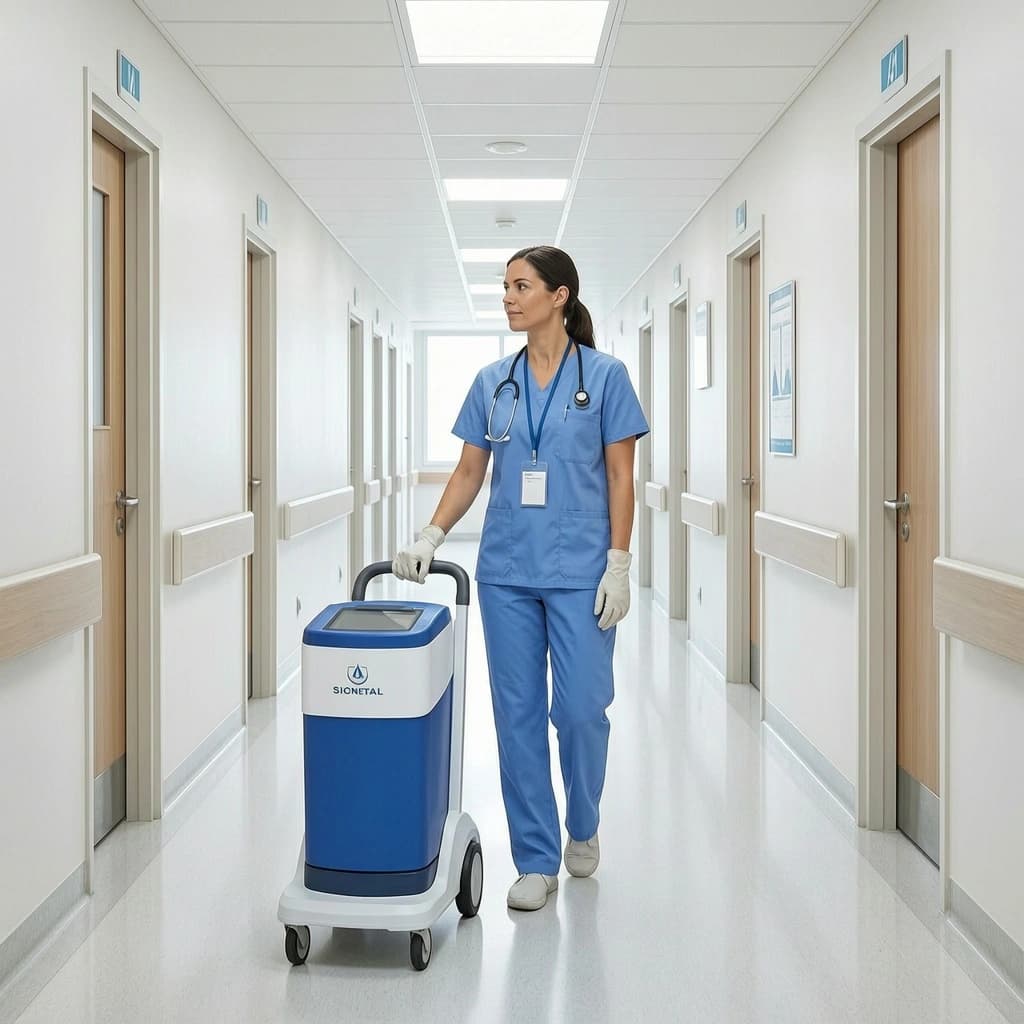
Ultraviolet light, hydrogen peroxide vapor, and electrostatic sprayers are no longer novel—they are expected adjuncts in many high-risk settings. However, technology supplements rather than replaces manual cleaning. Facilities should evaluate technologies based on evidence, room turnover impact, and total cost of ownership.
Documentation and Accountability
Surveyors in 2026 expect facilities to maintain comprehensive documentation including cleaning logs, training records, competency assessments, product safety data sheets, monitoring results, and corrective action documentation. Electronic environmental services management systems have become standard in larger facilities and are increasingly accessible to smaller operations through subscription platforms.
Conclusion
Healthcare facility cleaning standards in 2026 reflect a maturation of the field. Environmental services is recognized as a clinical discipline, and the standards that govern it have become more rigorous, more evidence-based, and more closely integrated with patient safety priorities.
For Integrated Medical Services and the facilities we serve, meeting these standards requires more than checking boxes. It requires a cultural shift that positions environmental services as a partner in infection prevention, supported by training, technology, documentation, and continuous improvement.
The facilities that excel in 2026 are those that treat cleaning not as a cost center but as a critical patient safety function. By adopting the standards and best practices outlined above, healthcare organizations can protect patients, satisfy regulators, and contribute meaningfully to the broader mission of reducing healthcare-associated infections.
For a facility-specific assessment of your environmental services program, contact Integrated Medical Services to schedule a consultation with our healthcare cleaning specialists.
More Stories
Risk-Based Environmental Cleaning: A Practical Guide for Healthcare Facilities
The CDC's risk-based approach to environmental cleaning provides healthcare facilities with a systematic framework that considers the probability of contamination, patient vulnerability, and potential for exposure.
Medical Waste Management: 2026 Regulatory Updates and Compliance Best Practices
Healthcare facilities across the United States are navigating a rapidly evolving landscape of medical waste regulations. From state-level overhauls to federal rule adoptions, the requirements for proper medical waste handling have never been more complex.