HIPAA-Compliant Cleaning Services: What Healthcare Facilities Need to Know
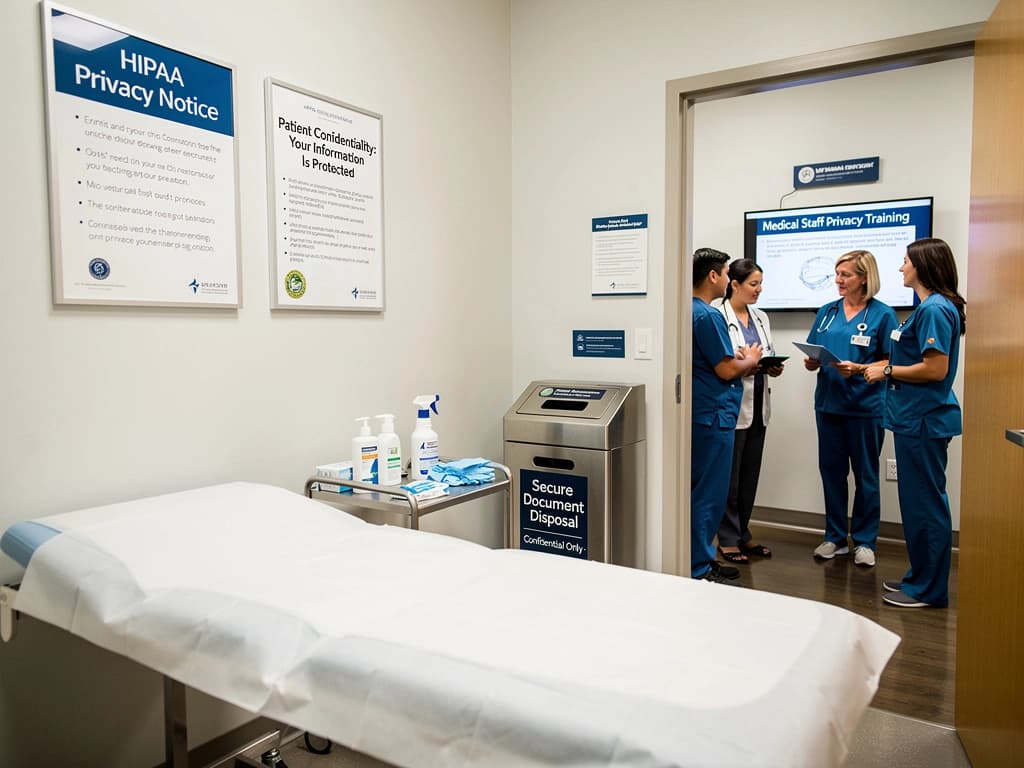
While much attention is given to how clinical staff handle protected health information, the environmental services team also plays a critical role in maintaining patient privacy and facility compliance.
HIPAA-Compliant Cleaning Services: What Healthcare Facilities Need to Know
Introduction
Healthcare facilities operate under a web of regulatory requirements, and HIPAA compliance sits at the center of any discussion about patient privacy. While much attention is given to how clinical staff handle protected health information, the environmental services team—the people who clean exam rooms, sanitize waiting areas, and dispose of potentially sensitive materials—also plays a critical role in maintaining patient privacy and facility compliance.
When cleaning crews enter a facility, they encounter a wide range of information: patient records left on counters, sensitive documents in exam rooms, and the potential for exposure to individually identifiable health information. Without proper training and protocols, cleaning staff can inadvertently become a weak link in a facility's compliance chain.
Understanding HIPAA's application to environmental services is essential for healthcare administrators, facility managers, and the cleaning companies that serve them. This guide covers the key considerations for maintaining HIPAA compliance throughout all cleaning operations.
Understanding HIPAA's Scope in Environmental Services
What HIPAA Protects
The Health Insurance Portability and Accountability Act establishes national standards for protecting sensitive patient health information. Protected Health Information includes any individually identifiable health information that relates to a person's past, present, or future physical or mental health condition, the healthcare services provided, and the payment for those services.
For environmental services teams, this information can appear in many forms during routine cleaning. A patient intake form left on a desk, a prescription bottle discarded in a waste basket, a discharge summary on a bedside table—these all constitute PHI that cleaning staff must handle appropriately.
The Minimum Necessary Standard
HIPAA's Minimum Necessary Standard requires that covered entities limit the use, disclosure, and request for PHI to the minimum amount necessary to accomplish the intended purpose. In practical terms for environmental services, this means cleaning staff should only access the information they need to perform their jobs—and no more.
Cleaning crews do not need to review patient files or examine medical records. Their role is to clean surfaces, remove waste, and maintain hygiene standards. Facilities should structure their protocols so that cleaning staff access only those areas necessary for their work, reducing unnecessary exposure to PHI.
Business Associate Agreements
When healthcare facilities contract with external cleaning companies, HIPAA requires that a Business Associate Agreement be in place before any services begin. This agreement establishes the cleaning company as a business associate, imposing specific obligations regarding PHI protection.
The business associate agreement should address how the cleaning company will handle PHI it may encounter, the training requirements for cleaning staff, the security measures in place, and the procedures for reporting any breaches. Facilities that fail to establish these agreements before services commence face significant compliance risk.
Practical Implications for Daily Cleaning Operations
Point-of-Service Documentation Handling
Patient information frequently appears in areas that cleaning staff service daily. During room turnover, cleaning crews may encounter intake forms, discharge papers, insurance cards, and other documents containing PHI. A clear protocol for handling these materials prevents accidental exposure or improper disposal.
The most effective approach is establishing designated areas or containers where clinical staff place sensitive documents before rooms are released for cleaning. Cleaning staff should be trained to recognize common forms of PHI and follow documented procedures for handling or reporting encountered materials.
When cleaning staff find documents they believe may contain PHI, they should not attempt to sort, review, or dispose of them independently. Instead, they should leave the materials in a designated secure location and notify supervisory staff who can ensure proper handling.
Waste Stream Segregation
Proper waste segregation serves dual purposes in healthcare facilities—it supports infection control and assists with HIPAA compliance. Regulated medical waste requires specific handling procedures, but even general waste streams may inadvertently contain sensitive information.
Cleaning protocols should emphasize that waste removal from patient care areas follows specific procedures. Documents should never be placed in regular waste containers unless they have been verified as not containing PHI. Clinical staff should shred or securely store any sensitive materials before rooms are cleaned.
For facilities that use third-party cleaning services, the waste handling procedures should be explicitly documented in the service agreement and reinforced through staff training.
Computer and Equipment Cleaning
The proliferation of computers, tablets, and medical devices throughout healthcare facilities creates additional considerations for environmental services teams. These devices may retain or display PHI, and cleaning staff must understand how to handle them appropriately.
When cleaning around workstations, staff should not log into systems, access files, or attempt to view information on screens. Equipment cleaning protocols should specify that devices be powered down or locked before cleaning nearby areas, and that no liquids contact electronic equipment.
Environmental services supervisors should coordinate with IT departments to identify any sensitive equipment areas and ensure cleaning protocols address these locations appropriately.
Staff Training Requirements
Baseline HIPAA Training
Every staff member who performs cleaning services in a healthcare facility should receive foundational HIPAA training before beginning work. This training should cover what PHI is, how it commonly appears in healthcare settings, why protection matters, and the consequences of non-compliance for both individuals and organizations.
Effective training programs go beyond abstract explanations. They use realistic scenarios based on actual compliance situations, showing cleaning staff how HIPAA principles apply to their specific daily responsibilities. Staff should understand that their work directly impacts patient privacy and that they are an essential component of the facility's compliance posture.
Ongoing Education and Updates
HIPAA regulations and guidance evolve, and cleaning staff training must keep pace. Annual refresher training ensures that staff maintain their awareness and learn about any regulatory changes that affect their responsibilities. Facilities should document all training completion and retain records demonstrating compliance.
When facilities implement new cleaning protocols, introduce new products or equipment, or make changes to their PHI handling procedures, additional training should accompany these operational updates. Staff should never implement new procedures without understanding how they affect HIPAA compliance.
Creating a Culture of Compliance
Training that focuses solely on rule-following often fails to produce lasting behavioral change. Facilities that achieve strong compliance outcomes create cultures where cleaning staff understand their role in patient protection and take personal responsibility for maintaining privacy standards.
Supervisors who model compliant behavior, who address potential issues promptly, and who recognize staff contributions to compliance strengthen these cultural norms. When cleaning team members feel that their work matters—that their attention to detail and commitment to proper procedures directly protects patients—they become active participants in the compliance program rather than passive rule-followers.
Choosing a HIPAA-Compliant Cleaning Partner
Questions to Ask Prospective Providers
Healthcare facilities that use external cleaning services should thoroughly evaluate potential partners' HIPAA compliance programs before entering agreements. Key questions include:
What HIPAA training does the company provide to staff, and how frequently? How does the company document training completion and competency verification? Does the company carry cyber liability insurance that addresses PHI exposure? What are the company's protocols for reporting suspected breaches? How does the company handle staff turnover and ensure continuous training coverage?
Red Flags to Avoid
Certain practices indicate that a cleaning company may not take HIPAA compliance seriously. Providers that cannot produce documentation of staff training, that lack clear protocols for handling encountered PHI, or that resist signing business associate agreements should be approached with caution.
The lowest bid rarely reflects the true cost of compliance risk. Facilities that select cleaning partners based primarily on price often discover later that shortcuts in training and protocols created vulnerabilities that could have been prevented with appropriate due diligence.
Contractual Protections
Beyond the business associate agreement, service contracts should specify performance standards, audit rights, and breach notification procedures. Facilities should retain the right to audit cleaning operations, review training documentation, and inspect protocols without advance notice.
Strong contracts also establish accountability for breaches. When cleaning staff actions contribute to a HIPAA violation, the contractual framework should clearly establish the cleaning company's responsibility and the facility's recourse options.
Best Practices Summary
Healthcare facilities can strengthen their HIPAA compliance posture through environmental services by implementing several foundational practices:
1. Conduct thorough risk assessments that identify where PHI is located, how cleaning staff interact with those areas, and what vulnerabilities exist in current protocols.
2. Develop explicit cleaning protocols that address PHI handling, documentation procedures, waste segregation, and equipment cleaning. Ensure these protocols are documented, staff-trained, and regularly reviewed.
3. Invest in comprehensive training that helps cleaning staff understand not just what to do but why it matters for patient protection. Make training engaging, scenario-based, and ongoing.
4. Establish clear communication channels so cleaning staff know who to contact when they encounter situations requiring clinical or administrative judgment.
5. Document everything—training completions, protocol updates, incident reports, and audit findings. Documentation transforms compliance from an abstraction into measurable accountability.
6. Conduct regular audits of cleaning operations to verify that protocols are being followed and that staff maintain their competency. Use audit findings to drive continuous improvement.
Conclusion
HIPAA compliance in healthcare environmental services is not merely a checkbox—it is an ongoing commitment to patient privacy that extends throughout every level of facility operations. Cleaning staff who understand their role in protecting sensitive information, who receive thorough training, and who work within clear protocols become assets in the facility's compliance infrastructure rather than potential vulnerabilities.
Healthcare facilities that invest in building strong environmental services compliance programs protect themselves from regulatory risk while demonstrating the broader commitment to patient care that defines excellent healthcare organizations. The connections between clean environments, patient safety, and privacy protection are inseparable—and the facilities that recognize this interconnection will always be better positioned for long-term success.
More Stories
Healthcare Facility Cleaning Standards: 2026 Compliance and Best Practices Guide
Healthcare-associated infections (HAIs) remain one of the most pressing challenges facing medical facilities, contributing to approximately 1.7 million
Risk-Based Environmental Cleaning: A Practical Guide for Healthcare Facilities
The CDC's risk-based approach to environmental cleaning provides healthcare facilities with a systematic framework that considers the probability of contamination, patient vulnerability, and potential for exposure.