What the Joint Commission's Accreditation 360 Means for Healthcare Facility Cleaning
On January 1, 2026, the Joint Commission rolled out its sweeping Accreditation 360 initiative — a top-to-bottom overhaul that eliminated over 700 redundant requirements and restructured how hospitals, ambulatory centers, and clinics are evaluated for patient safety and compliance.
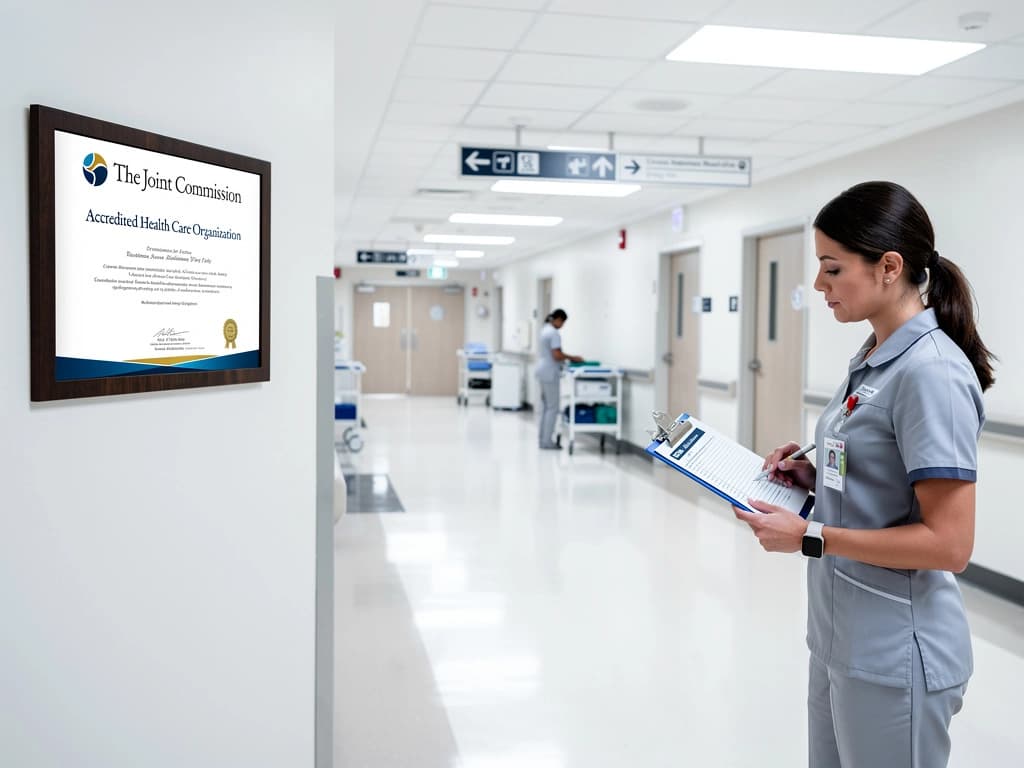
What the Joint Commission's Accreditation 360 Means for Healthcare Facility Cleaning
Introduction
Healthcare facilities across the United States are navigating one of the most significant regulatory shifts in recent memory. On January 1, 2026, the Joint Commission rolled out its sweeping Accreditation 360 initiative — a top-to-bottom overhaul that eliminated over 700 redundant requirements and restructured how hospitals, ambulatory centers, and clinics are evaluated for patient safety and compliance.
For healthcare administrators and facility managers, these changes carry direct implications for how environmental services departments operate, document their work, and demonstrate compliance. The restructuring places infection prevention and environmental hygiene squarely at the center of measurable, system-level accountability — not just a checklist item buried in a manual.
Understanding what changed, why it matters, and how to adapt is essential for any facility that relies on professional cleaning services to maintain safe, compliant environments for patients and staff.
What Changed Under Accreditation 360
Consolidated Physical Environment Standards
One of the most impactful changes for environmental services teams is the merger of the former Environment of Care (EC) and Life Safety (LS) chapters into a single Physical Environment section. Previously, cleaning and sanitation requirements were scattered across multiple chapters, creating confusion about which standards applied to which situations.
The consolidated approach means that facility cleanliness, surface disinfection, air quality, and waste management are now evaluated as interconnected components of the same physical environment — rather than as isolated compliance items. Surveyors are trained to assess these elements holistically during facility walkthroughs.
From Safety Goals to Performance Goals
The Joint Commission replaced its longstanding National Patient Safety Goals (NPSGs) with National Performance Goals (NPGs). The distinction is more than semantic. Performance goals emphasize measurable outcomes and continuous improvement rather than binary pass-fail compliance checks.
For infection prevention and environmental services, this means facilities must demonstrate that their cleaning protocols are producing results — not just that protocols exist on paper. Expect surveyors to ask for data on environmental monitoring, infection rates tied to environmental factors, and evidence of ongoing quality improvement initiatives.
CMS Alignment Transparency
Each standard under the new framework now explicitly identifies whether it aligns with CMS Conditions of Participation or exceeds federal requirements. This transparency helps facility managers prioritize resources. Standards that map directly to CMS requirements represent the compliance floor — meeting them is non-negotiable for Medicare and Medicaid participation. Standards that exceed CMS baseline represent best-practice benchmarks that facilities should aspire to.
Why This Matters for Environmental Services
Documentation Is No Longer Optional
Under the performance-driven model, environmental services departments need robust documentation systems. Cleaning logs, disinfection verification records, and staff competency documentation are now critical pieces of survey evidence. Facilities that rely on informal tracking or verbal sign-offs face significant compliance risk.
Professional cleaning partners should be prepared to provide:
- Detailed cleaning logs with timestamps, areas serviced, and products used
- Disinfection verification data including contact time compliance and high-touch surface coverage
- Staff training records showing competency in healthcare-specific cleaning protocols
- Quality assurance reports demonstrating continuous improvement over time
Infection Control as a System-Level Priority
Accreditation 360 treats infection prevention as a facility-wide system rather than an isolated department function. Environmental cleaning is now explicitly linked to infection control outcomes at the organizational level. This means that a failure in environmental hygiene can trigger findings across multiple standards — not just in the physical environment section.
Healthcare facilities should ensure their environmental services teams, whether in-house or contracted, are integrated into the facility's infection prevention committee discussions and have clear communication channels with clinical leadership.
Surveyor Methodology Has Evolved
Joint Commission surveyors are conducting more observational assessments during their visits. Rather than reviewing binders of policies, they observe cleaning practices in real time, interview environmental services staff about their procedures, and cross-reference what they see with documented protocols. This makes consistent, hands-on training more important than ever.
Best Practices for Compliance in 2026
Healthcare facilities can take several practical steps to align with the new framework:
1. Audit your current documentation. Review all cleaning and disinfection records for completeness. Identify gaps where processes happen but are not documented. If it is not documented, it did not happen — this principle is now enforced with measurable accountability.
2. Invest in staff training and competency verification. Ensure every member of your environmental services team — including contracted personnel — can articulate the cleaning protocols they follow and explain why specific products and contact times are used. Surveyors will ask.
3. Integrate environmental services into infection prevention planning. Break down silos between clinical infection prevention teams and environmental services. Schedule regular joint meetings, share infection surveillance data, and collaborate on quality improvement projects.
4. Adopt outcome-based metrics. Move beyond tracking whether rooms were cleaned to measuring how effectively they were cleaned. Consider implementing ATP bioluminescence testing, fluorescent marker programs, or other environmental monitoring tools that produce objective, quantifiable data.
5. Partner with qualified professionals. Facilities that contract with external cleaning services should verify that their partners understand Joint Commission requirements, use EPA-registered disinfectants appropriate for healthcare settings, and maintain their own staff training and quality assurance programs.
6. Stay current on evolving standards. The Joint Commission has indicated that Accreditation 360 is a living framework, with additional refinements expected throughout 2026 and beyond. Designate a compliance point person to monitor updates and translate them into operational changes.
Looking Ahead
The Accreditation 360 overhaul reflects a broader shift in healthcare regulation toward accountability and measurable outcomes. For environmental services, this is an opportunity — facilities that embrace outcome-driven cleaning practices will not only pass surveys but will demonstrably improve patient safety and infection prevention.
At the same time, the stakes are higher for facilities that treat environmental hygiene as an afterthought. Regulatory scrutiny of cleaning and disinfection practices will only increase as the evidence linking environmental contamination to healthcare-associated infections continues to grow.
Healthcare facilities that invest in professional, well-documented, and outcome-focused cleaning programs today are positioning themselves for long-term compliance success — and more importantly, for safer patient care.
Conclusion
The Joint Commission's Accreditation 360 represents the most significant restructuring of healthcare accreditation standards in years. For environmental services teams and the facilities they support, the message is clear: cleaning and disinfection are no longer background operations. They are front-and-center compliance requirements with measurable performance expectations.
Facilities that take proactive steps — strengthening documentation, investing in training, integrating with infection prevention teams, and partnering with qualified cleaning professionals — will be well prepared to meet these new standards and deliver the safe, clean environments that patients and staff deserve.
More Stories
Healthcare Facility Cleaning Standards: 2026 Compliance and Best Practices Guide
Healthcare-associated infections (HAIs) remain one of the most pressing challenges facing medical facilities, contributing to approximately 1.7 million
Risk-Based Environmental Cleaning: A Practical Guide for Healthcare Facilities
The CDC's risk-based approach to environmental cleaning provides healthcare facilities with a systematic framework that considers the probability of contamination, patient vulnerability, and potential for exposure.